Plastic Conveyor Rollers
PVC conveyor rollers are built with a non-metallic tube body, plastic end caps, bearings, and a steel shaft. They are a practical choice for light-duty conveyor lines that need lower weight, corrosion resistance, and a surface that is gentler on conveyed products than steel.
LEEV supplies gray or blue PVC tube rollers in standard outside diameters from 25 mm to 60 mm, with custom face length, shaft diameter, shaft end, and OEM build options according to your drawing or sample.
25-60 mm
Rigid PVC
8 / 10 / 12 mm steel
Custom & OEM
PVC Conveyor Roller Structure
The PVC tube does the work the shell normally would: it carries the load across its face, resists moisture, acid and alkali without rusting, and is gentler on finished goods than a steel roller. The steel shaft carries the mounting and bending loads at the frame. This split โ non-metallic tube, steel shaft โ is why a PVC roller stays light and corrosion-free while still mounting and turning like a standard roller.
How a PVC Conveyor Roller Is Built
A PVC conveyor roller starts with a rigid PVC tube body, then plastic end caps, bearings, and a steel shaft are assembled to create a lightweight, corrosion-resistant roller for light-duty conveyor lines.
Special End-Cap and Bearing Option for Acid / Alkali Lines
Special note: this is not the standard default structure for most PVC conveyor rollers.
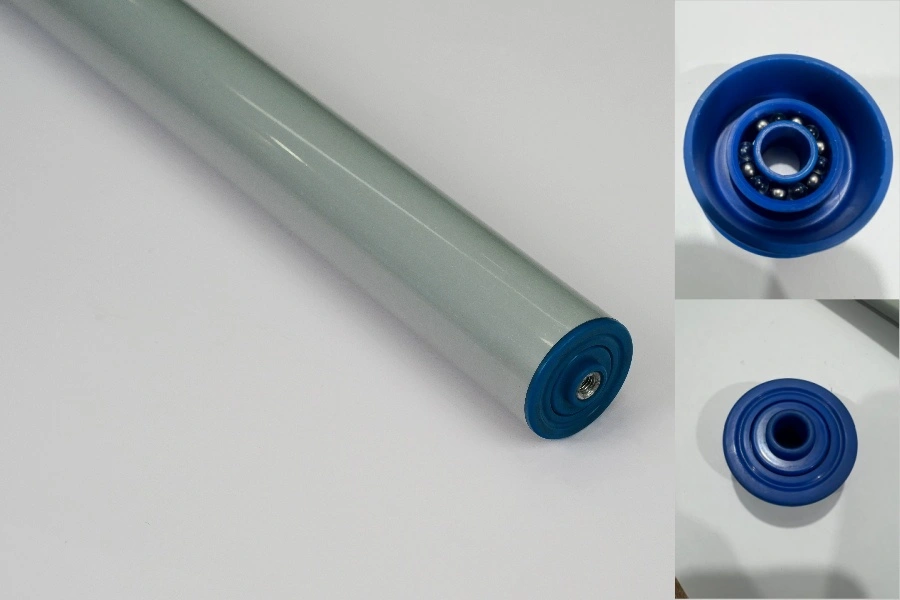
This photo shows a special PVC roller option, not the standard PVC roller default. Most PVC conveyor rollers use a conventional plastic end cap and standard bearing arrangement. The blue end-cap roller shown here is used to explain corrosion-focused requirements for acid, alkali, or battery production conveyor lines.
Inside the blue end cap, the bearing balls can be supplied as a combination of glass balls and stainless-steel balls to improve corrosion resistance in harsh environments. If required, the bearing balls can also be changed to a full stainless-steel configuration.
When to Choose a PVC Roller vs Steel or Stainless
PVC vs steel vs stainless steel: how to choose
Plastic is not “lower quality” โ it is the right material for a specific set of conditions. Choose by the environment, not by price alone.
| PVC (plastic) | Zinc-plated / galvanized steel | Stainless steel (304) | |
|---|---|---|---|
| Weight | Lightest | Heavy | Heavy |
| Corrosion resistance | High โ non-metallic, will not rust | Moderate (zinc layer) | Highest |
| Gentle on product | Yes (less likely to scratch) | No | No |
| Relative cost | Low | Low-medium | High |
| Best for | Light-duty, damp, surface-sensitive, and corrosive lines | General-duty handling | Hygienic, wet, heavy-duty handling |
If the line is light-duty and you mainly need corrosion resistance, low weight, or a surface that is gentle on product, a PVC roller is usually the most cost-effective choice. For heavy-duty or hygienic wash-down handling, move to galvanized steel or stainless steel.
PVC Roller Sizes and Specifications
Standard PVC tube outside diameters and wall thicknesses are listed below. Roller face length, shaft end, and mounting details are made to your conveyor frame and drawing.
| Tube OD | Wall Thickness | Steel Shaft Diameter |
|---|---|---|
| 25 mm | 1.5 mm | 8 mm |
| 32 mm | 1.5 mm | 8 / 10 mm |
| 38 mm | 1.6 mm | 8 / 10 / 12 mm |
| 38 mm | 3.0 mm | 8 / 10 / 12 mm |
| 40 mm | 2.2 mm | 8 / 10 / 12 mm |
| 48 mm | 2.85 mm | 8 / 10 / 12 mm |
| 48 mm | 5.0 mm | 8 / 10 / 12 mm |
| 50 mm | 2.5 mm | 8 / 10 / 12 mm |
| 50 mm | 5.0 mm | 8 / 10 / 12 mm |
| 60 mm | 3.0 / 4.0 / 5.0 mm | 8 / 10 / 12 mm |
Custom and OEM PVC Conveyor Rollers
Send a drawing or sample roller with the tube OD, wall thickness, face length, shaft diameter, shaft end form, and mounting dimension. LEEV confirms a manufacturing drawing before production.
OEM, private-label, and bulk orders are available for conveyor equipment builders, roller factories, and system integrators.
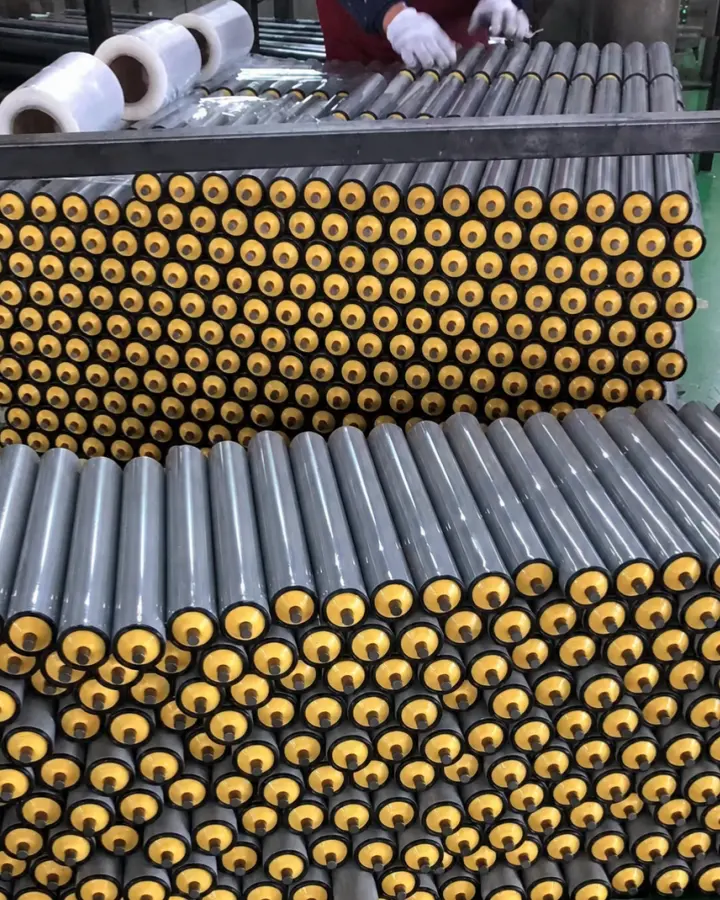
Need PVC Rollers Built to Your Spec?
Send your drawing or sample. We will confirm the manufacturing drawing and quote the correct build.
FAQ
Yes, PVC tube rollers are often considered where corrosion resistance is important. For more demanding acid or alkali lines, confirm the bearing and end-cap configuration so the full roller structure matches the environment.
No. This page covers rollers with a PVC tube body. A PVC sleeve over a metal roller is a covered roller and should be specified separately.
Yes. Shaft ends can be machined to match the conveyor frame, including internal thread, spring-loaded shaft, flat end, or drawing-specific forms.
Please provide tube OD, wall thickness, roller face length, shaft diameter, shaft end type, mounting dimension, quantity, and any environmental requirements

