

Sprocket Conveyor Roller Structures & Material Configurations
Different sprocket structures and material combinations are selected according to conveyor environments, transmission layouts, wear resistance, and project cost requirements.

Steel Single Sprocket Roller
A practical structure for chain driven roller systems where stable transmission, repeat production, and reliable sprocket engagement are required.

Stainless Tube with Carbon Steel Sprocket
A cost-effective solution that combines stainless steel tube corrosion resistance with the better wear performance of carbon steel sprockets.

Nylon Plastic Sprocket Roller
Designed for lighter conveyor systems where lower running noise, reduced weight, and corrosion resistance are more important than heavy load capacity.
For sprocket conveyor rollers, the manufacturing accuracy of the sprocket is just as important as the roller tube itself. Sprocket radial run-out, end face run-out, welding position, and shaft concentricity can directly influence chain transmission stability.
If the sprocket end face run-out is too large, the chain may not run smoothly during operation. This can cause abnormal noise, faster sprocket and chain wear, vibration, and unstable material conveying.
Sprocket Engagement and Bearing Seat Tolerance
Beyond run-out and concentricity, two checks decide whether a sprocket roller runs reliably under chain load. The first is sprocket-to-chain engagement: we confirm that the teeth seat correctly in the chain so the load is shared across several teeth instead of being concentrated on one. Poor engagement leads to uneven tooth wear, added noise, and faster chain stretch.
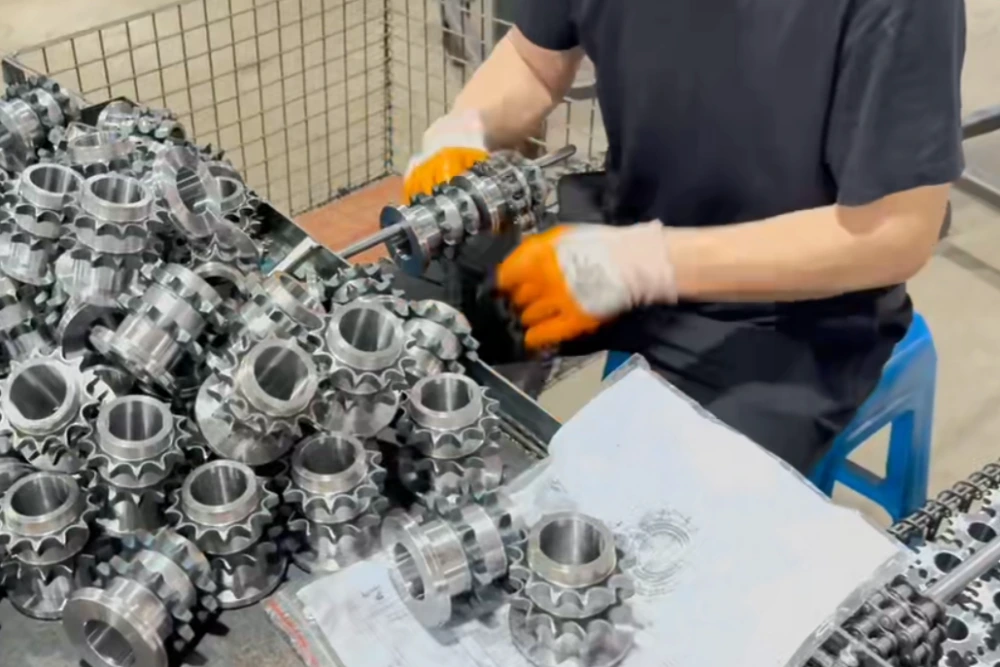
Checking sprocket-to-chain engagement so the load is shared across multiple teeth.
The second is the bearing seat on the sprocket shaft, which matters just as much. If the bearing seat is oversized, the bearing can turn in the seat instead of with the shaft, which causes rapid wear and early failure. Machining the seat before hardening does not hold up, because heat treatment shifts the dimension and the tolerance drifts. For this reason we harden the shaft first and then finish-machine the bearing seat to final size. Hardened steel is harder and slower to cut, so this adds cost, but it is the only way to hold the bearing-seat tolerance.
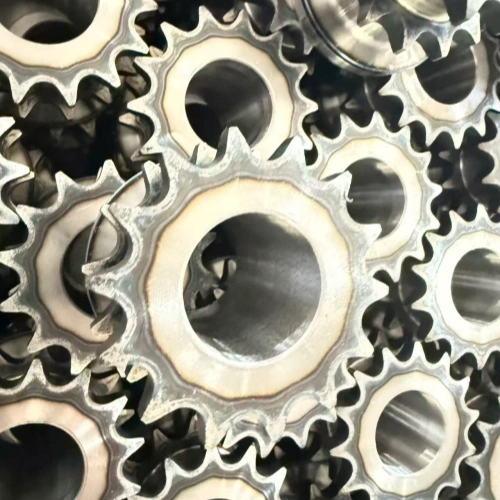
Hardened first, then the bearing seat is finish-machined to hold final tolerance.
Material and Surface Treatment
- Carbon steel sprockets can be heat treated to improve wear resistance for continuous chain transmission.
- 304 stainless steel sprockets are available for corrosive conveyor environments, but they are usually more expensive and may not provide the same wear resistance as hardened carbon steel sprockets.
- For many conveyor systems, a practical solution is to use stainless steel roller tubes with carbon steel sprockets, balancing corrosion resistance, sprocket durability, and project cost.
- When carbon steel sprockets are welded to stainless steel tubes, the sprockets are commonly black oxide treated before welding.
- For carbon steel rollers, the sprocket and tube are usually welded first and then zinc plated together.
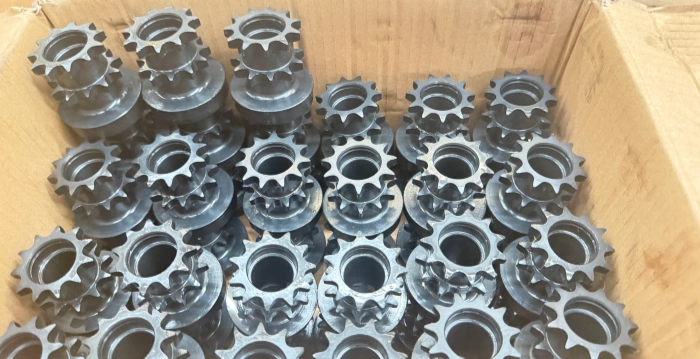
Black oxide treated carbon steel sprockets prepared for welding to stainless steel conveyor roller tubes.
Custom Manufacturing Capability
- Steel sprockets are typically customized according to customer drawings.
- Customized sprocket positions, double sprocket layouts, shaft structures, and mounting dimensions can be manufactured according to conveyor designs.
- For long-term projects, commonly used sprocket models may be prepared in advance to help shorten repeat order lead times.


Sprocket Rollers in This Category
Representative chain-driven sprocket rollers from our production line. Sprocket teeth, pitch and shaft are matched to your drive chain.
Explore More
- Engineering guides: reducing chain-drive noise and bearing seats for driven rollers.
- Where they run: sprocket rollers on powered & accumulation lines in warehouses.
- Not sure which type fits? Compare all conveyor roller types in our selection guide.
Typical Applications of Sprocket Conveyor Rollers
Sprocket conveyor rollers are widely used in powered conveyor systems requiring synchronized roller transmission, continuous product movement, and stable chain driven conveying performance.
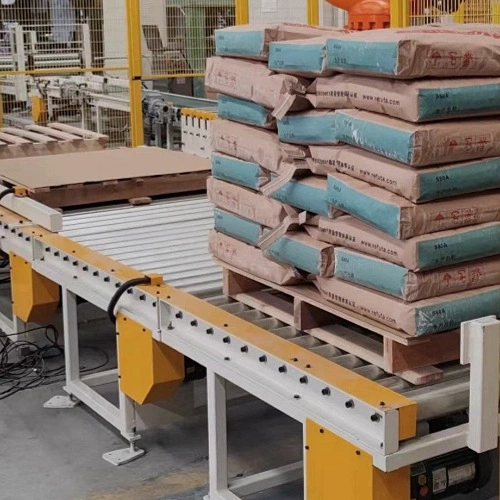
Pallet Conveyor Systems
Used in pallet conveyor systems requiring synchronized powered roller transmission for stable product movement and continuous conveying.
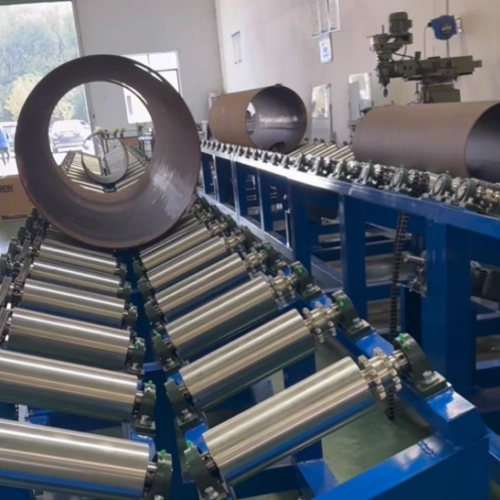
V-Groove Steel Pipe Conveyor Lines
Used in V-groove conveyor lines for stable synchronized conveying of steel pipes, round tubes, and cylindrical industrial materials.
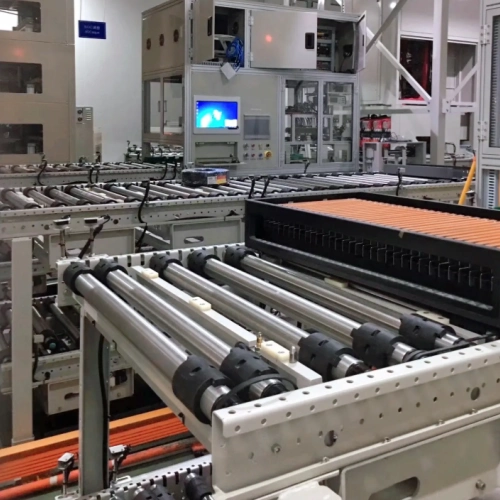
Lithium Battery Assembly Lines
Used in lithium battery assembly lines requiring stainless steel sprocket conveyor rollers for stable synchronized transmission and corrosion resistant conveying environments.
Custom Sprocket Conveyor Roller Options
LEEV manufactures sprocket conveyor rollers according to customer drawings, chain specifications, roller dimensions, and conveyor layout requirements. Different structures can be selected according to load, transmission method, installation space, and working environment.
Roller Diameter
1 inch, 2 inch, 50mm, 60mm, 76mm, 89mm, and customized roller diameters according to conveyor system requirements.
Sprocket Structures
Single sprocket, double sprocket, nylon sprocket, carbon steel sprocket, and customized sprocket positions.
Shaft Configurations
Spring loaded shaft, internal thread, external thread, hex shaft, milled flat shaft, and special mounting structures.
Material and Surface Options
Carbon steel, stainless steel, zinc plating, black oxide sprockets, and stainless tube with carbon steel sprocket structures.
If you have conveyor drawings, chain standards, or sprocket specifications, please feel free to contact our team for quotation support and manufacturing discussion.
You can also visit our conveyor roller manufacturer page to learn more about our factory production capabilities and custom manufacturing experience.


