

Heavy Duty Conveyor Roller Types

Welded Heavy Duty Conveyor Roller
Welded bearing housing structures provide better rigidity and long-term stability for heavy-load conveying applications.

Large Shaft Conveyor Roller
Large shaft configurations help reduce shaft deflection in heavy-duty pallet conveyor systems.

Sprocket Heavy Duty Conveyor Roller
Designed for powered conveyor systems requiring synchronized conveying performance.

Stainless Steel Heavy Duty Conveyor Roller
Suitable for humid, corrosive, and food-grade conveying environments.
Heavy Duty Conveyor Roller Applications
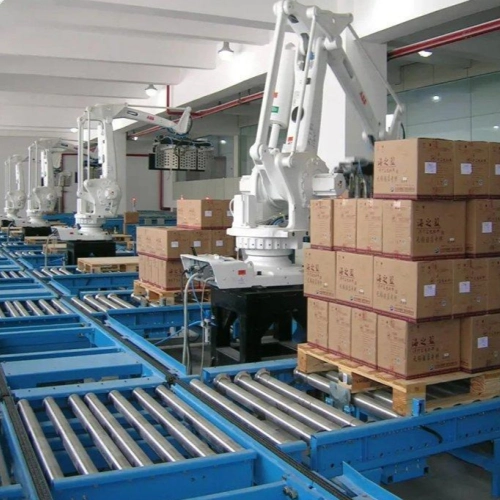
Pallet Conveyor Systems
Heavy duty conveyor rollers are commonly used in automated pallet transfer systems and warehouse conveying applications.
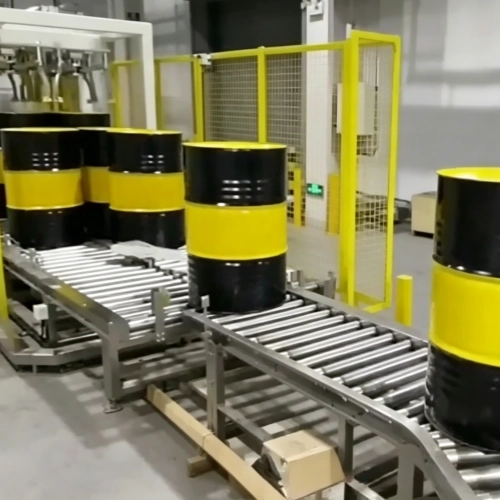
Drum Conveyor Systems
Suitable for industrial drum conveying applications requiring stable heavy-load transfer performance.
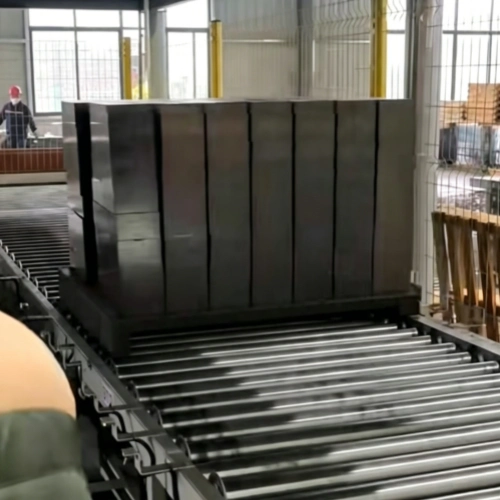
Heavy Industrial Transfer Systems
Used in automated industrial conveying systems for heavy materials, large components, and high-load transfer applications.


Under high-load operating conditions, standard stamped bearing housings may gradually deform or loosen during long-term operation.
For this reason, heavy duty conveyor rollers commonly use:
- Machined bearing housings
- Welded end caps
- Larger welding contact areas
- Thicker structural components
Especially for large-diameter rollers such as φ76, φ89, and φ108, welded structures are widely used in heavy-load conveying systems.
Although welded bearing housings increase manufacturing cost, they usually provide better long-term stability under heavy industrial applications.
In our production experience, welded bearing housing structures are commonly used for rollers from φ89 and above, especially in pallet conveyor and heavy-load conveying applications.
However, in some special applications, customers may also request welded structures for smaller diameter rollers in order to achieve higher structural rigidity and long-term stability.
Compared with light-duty rollers, heavy duty conveyor rollers are usually more difficult to straighten and control during manufacturing.
To reduce welding deformation and roller runout, we typically perform straightening twice during production:
- First straightening after tube cutting
- Final inspection and straightening after welding and complete roller assembly
This process helps improve roller concentricity and long-term operational stability in heavy-load conveying systems.
Heavy-Duty Rollers in This Category
Representative heavy-duty conveyor rollers from our production line. Tube wall, shaft diameter and bearing housing are built to your load case.
Explore More
- Engineering guides: preventing deflection under heavy loads and bearing housings for high-load rollers.
- Where they run: heavy-duty rollers on warehouse & pallet-handling lines.
- Not sure which type fits? Compare all conveyor roller types in our selection guide.
Why Is Shaft Diameter Important in Heavy Duty Conveyor Rollers?
In conveyor systems, shaft deflection is usually influenced by multiple factors, including roller length, shaft diameter, load distribution, and installation structure.
For longer rollers and high-load conveying applications, insufficient shaft rigidity may lead to shaft bending, vibration, uneven bearing load, and unstable conveying performance during long-term operation.
Common issues include:
- Shaft bending
- Shaft offset
- Roller vibration
- Uneven bearing load
- Roller runout
For this reason, heavy duty conveyor rollers usually adopt larger shaft configurations depending on actual conveying conditions.
| Roller Diameter | Common Shaft Diameter |
|---|---|
| φ48.2 / φ50 | φ12 / φ15 |
| φ60 / φ63.5 | φ15 / φ20 |
| φ76 | φ15 / φ20 |
| φ80 / φ89 | φ20 / φ25 |
| φ108 | φ20 / φ25 / φ30 |
Actual shaft selection depends on:
- Roller length
- Single roller load
- Conveyor structure
- Roller spacing
- Installation method
- Material weight
In some applications, roller length may have a greater influence on shaft deflection than load alone.
For pallet conveyor systems and long-span conveying applications, larger shaft structures usually provide better long-term conveying stability.
What Installation Methods Are Suitable for Heavy Duty Rollers?
Installation structure directly affects the long-term stability of heavy duty conveyor rollers.
Although spring loaded shafts are common in light-duty conveying systems, heavy-duty applications usually prefer:
- Internal thread shafts
- Through shafts
- Flat milled shafts
Compared with spring loaded shafts, internal thread structures usually provide:
- Better rigidity
- Lower vibration
- More stable positioning
- Lower long-term offset risk
They are especially suitable for:
- Pallet conveyor systems
- Heavy warehouse conveying
- High-load transfer systems
Different installation methods may affect roller stability, maintenance, and long-term conveying performance depending on the application requirements.
In some heavy-load applications, spring loaded shafts may create small installation gaps between the roller and frame, which can affect long-term conveying stability under continuous pallet transfer conditions.
For this reason, internal thread structures are commonly preferred in heavy duty conveyor systems requiring better rigidity and more stable positioning.
For more information about conveyor roller installation methods, please visit:
How Is Roller Runout Controlled in Heavy Duty Conveyor Rollers?
For heavy duty conveyor rollers, load capacity alone does not guarantee stable conveying performance.
In long-term pallet conveying and industrial transfer applications, unstable roller rotation may lead to:
- Conveyor vibration
- Uneven material transfer
- Increased bearing wear
- Noise during operation
- Reduced conveying stability
Especially in heavy-load conveying environments, stable material transfer becomes even more important. Compared with light-duty applications, heavy materials are more sensitive to roller vibration and unstable conveying movement, which may increase the risk of production problems and safety issues during operation.
Compared with light-duty rollers, heavy duty conveyor rollers are usually more difficult to control during manufacturing, especially after welding and assembly.
In practical production, roller runout is commonly affected by:
- Tube straightness
- Tube wall consistency
- Tube roundness
- Shaft concentricity
- Welding deformation
- Bearing housing machining accuracy
- Final assembly accuracy
In many cases, the tube itself has a greater influence on final roller runout than welding alone, especially for large-diameter and long rollers.
To improve conveying stability, we typically perform final inspection and straightening after complete roller assembly.
Especially in pallet conveyor systems and automated warehouse applications, stable roller rotation is extremely important for long-term operation.
Surface Treatment Options for Heavy Duty Conveyor Rollers
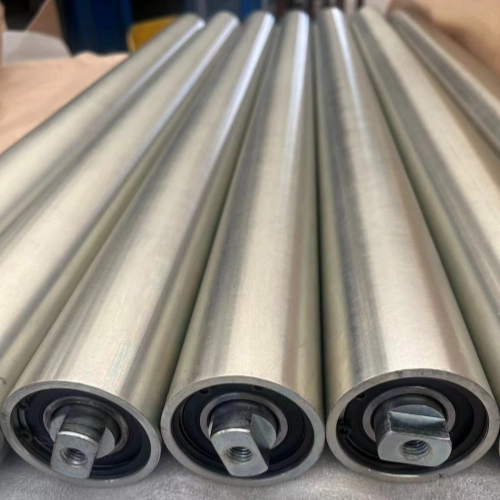
Zinc Plated Heavy Duty Roller
Suitable for warehouse systems and general industrial conveying applications requiring economical corrosion protection.
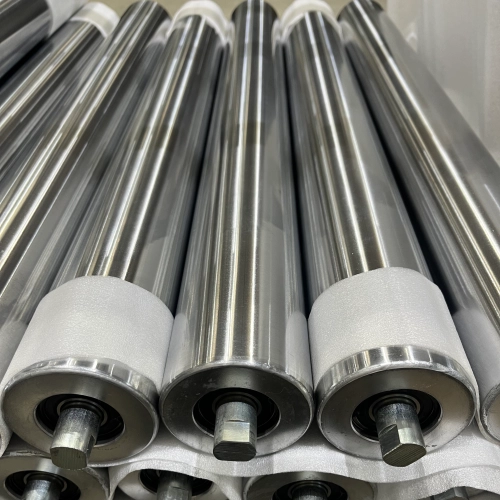
Chrome Finished Heavy Duty Roller
Used in conveying systems requiring better surface hardness, wear resistance, and improved surface finish.
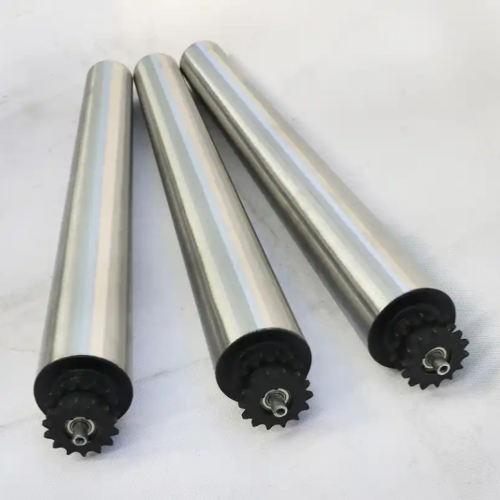
304 Stainless Steel Sprocket Heavy Duty Roller
Suitable for humid, corrosive, and food-grade conveying environments requiring long-term corrosion resistance.
Custom Heavy Duty Conveyor Roller Manufacturer
LEEV manufactures heavy duty conveyor rollers according to customer drawings and actual conveying conditions.
Custom options include:
- Roller diameter
- Tube thickness
- Shaft diameter
- Bearing type
- Installation structure
- Surface treatment
- Stainless steel material
- Sprocket configurations
If you are looking for heavy duty conveyor rollers for pallet conveyor systems or industrial material handling applications, please feel free to contact us for technical support and quotation.


