What a poly V roller is — and why the drive is at the end
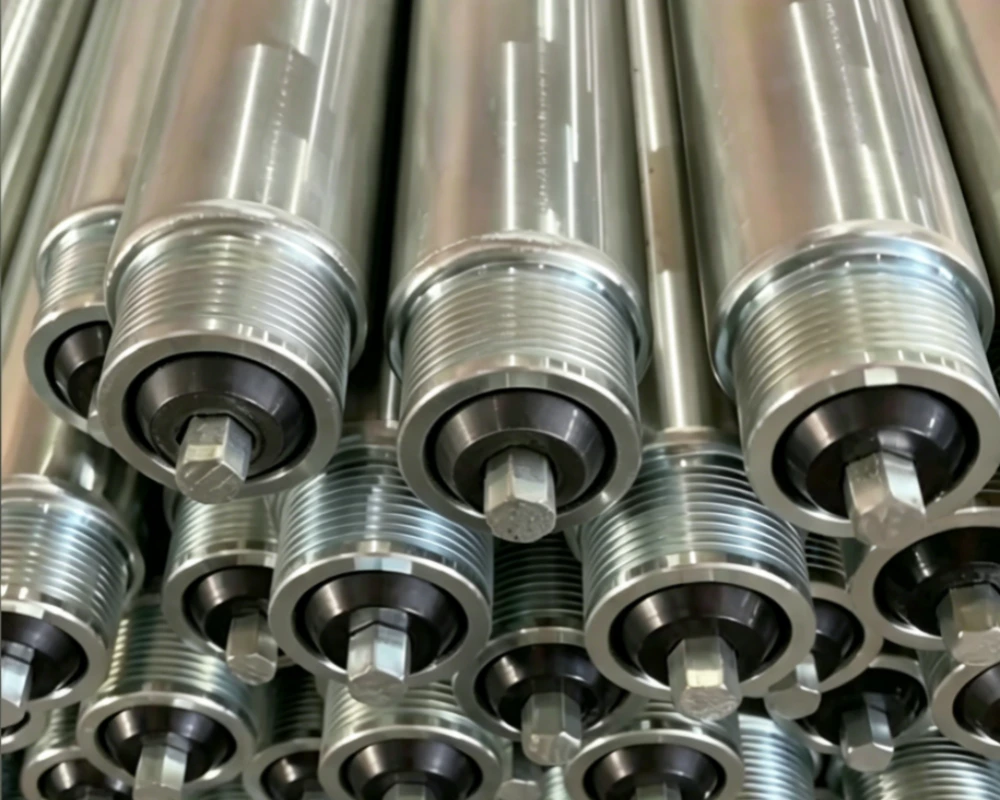
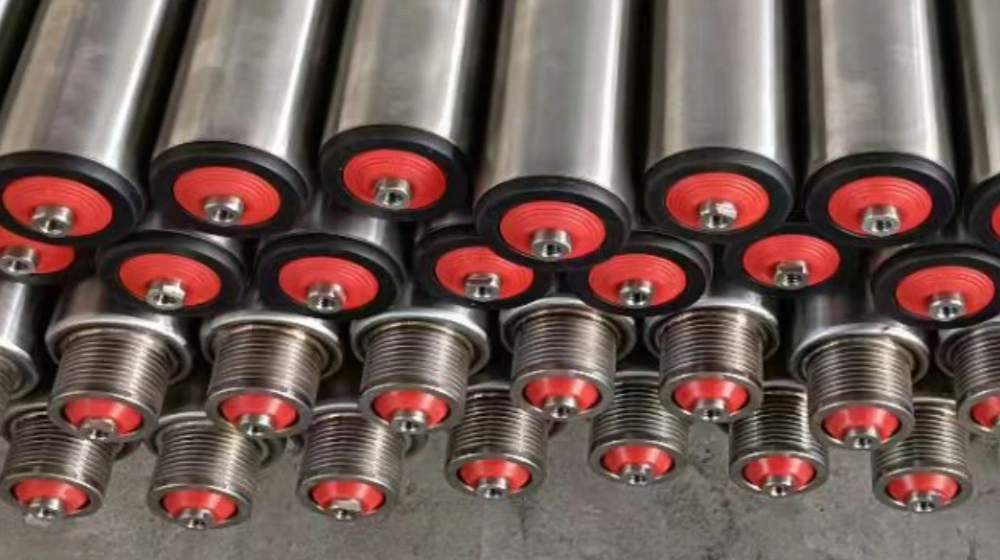
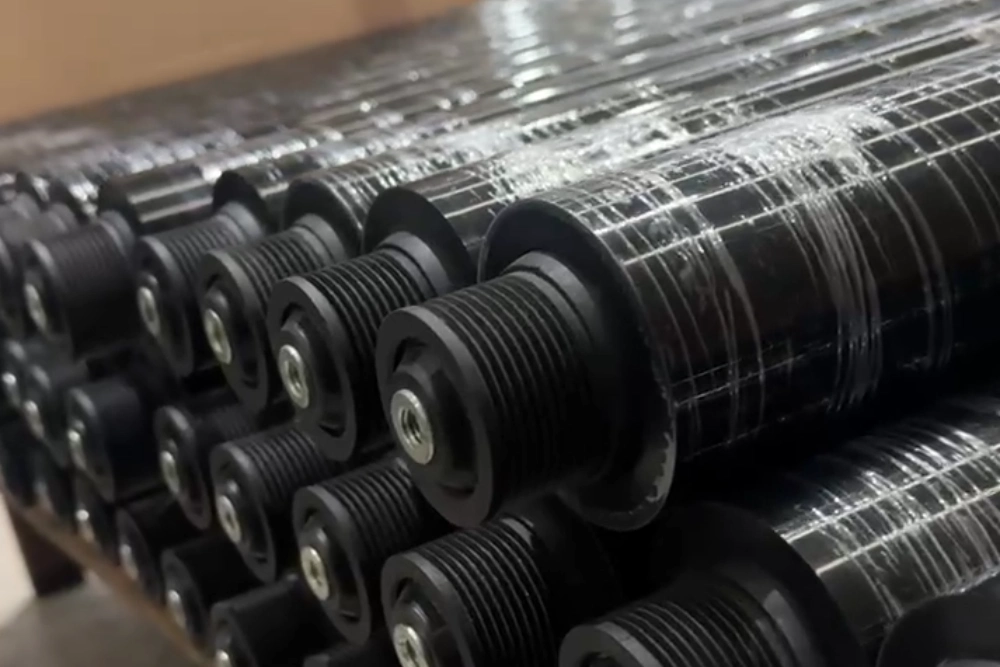
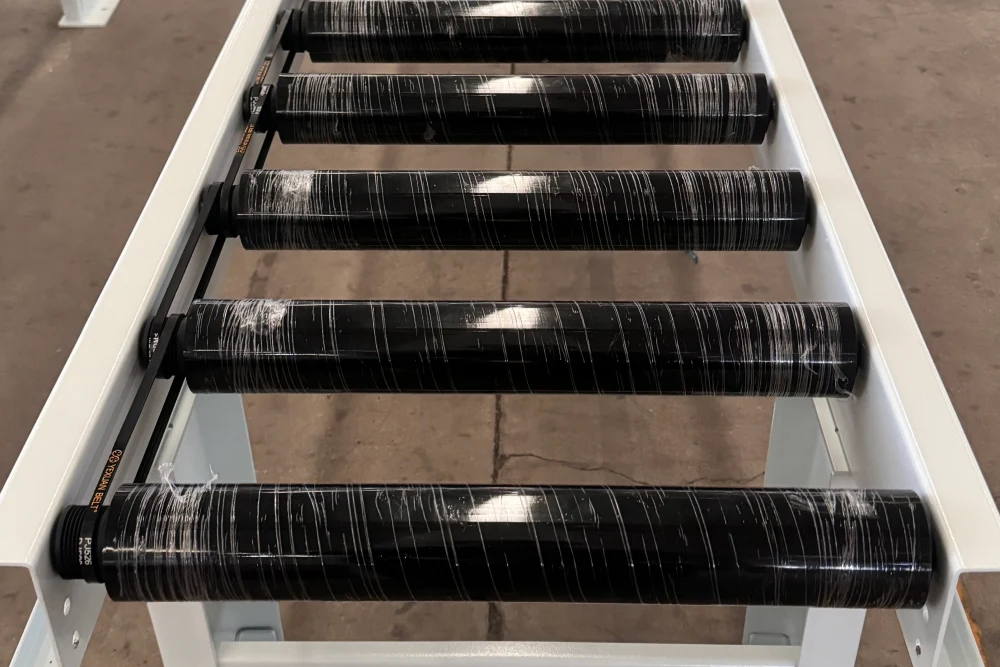
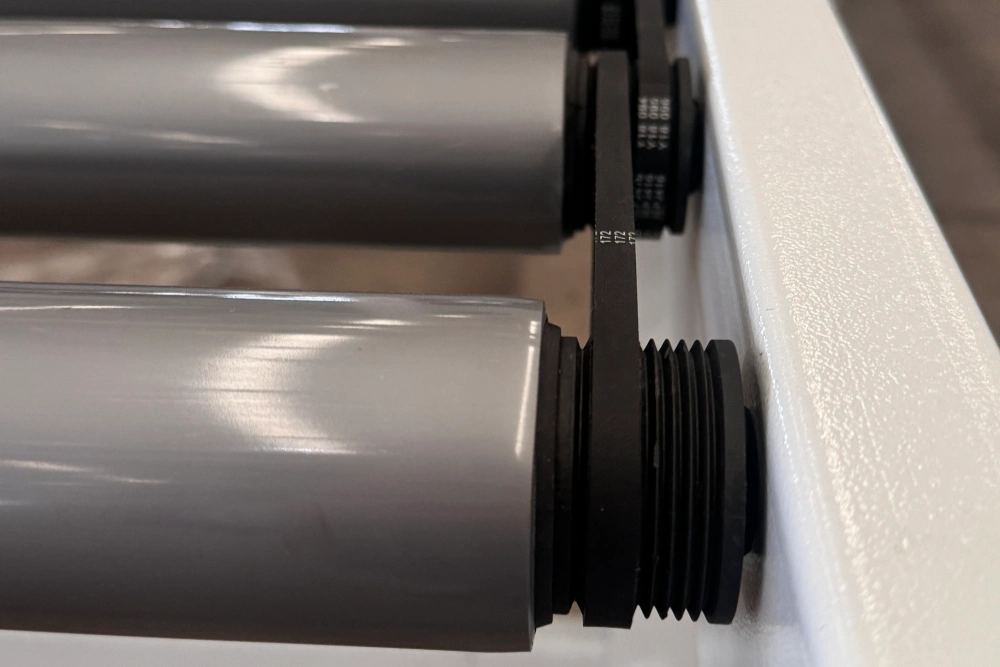
A poly V conveyor roller is a positively driven live roller. Instead of an O-ring sitting in a single groove, a multi-rib PJ pulley is fitted at one end of the tube and a matching poly V belt links roller to roller, or runs off a lineshaft. Because the belt seats in several ribs at once, it transmits far more torque than a round belt, runs quietly, and keeps the drive zone separated from the carrying surface — so product rides on a clean tube while all the driving happens at the end.
That makes poly V rollers a common choice for powered carton, tote and light-pallet handling on lineshaft and roller-to-roller powered lines. We manufacture the rollers — not the complete conveyor — so the page below focuses on the roller itself: materials, groove counts, finishes and how each is made.

Three types: plastic, steel and stainless
The right material is a trade-off between cost, the diameters you need, and the working environment. The poly V pulley is either injection-molded (plastic) or machined (steel, stainless and aluminum), and that single difference drives most of the selection logic below. Aluminum is also available where a lighter machined pulley is wanted — it is machined like steel, so any diameter and groove count is possible.
Molded vs machined — why diameter freedom differs
This is the single most important thing to understand before you specify a poly V roller, because it decides whether your diameter is a stock option or a tooling project.
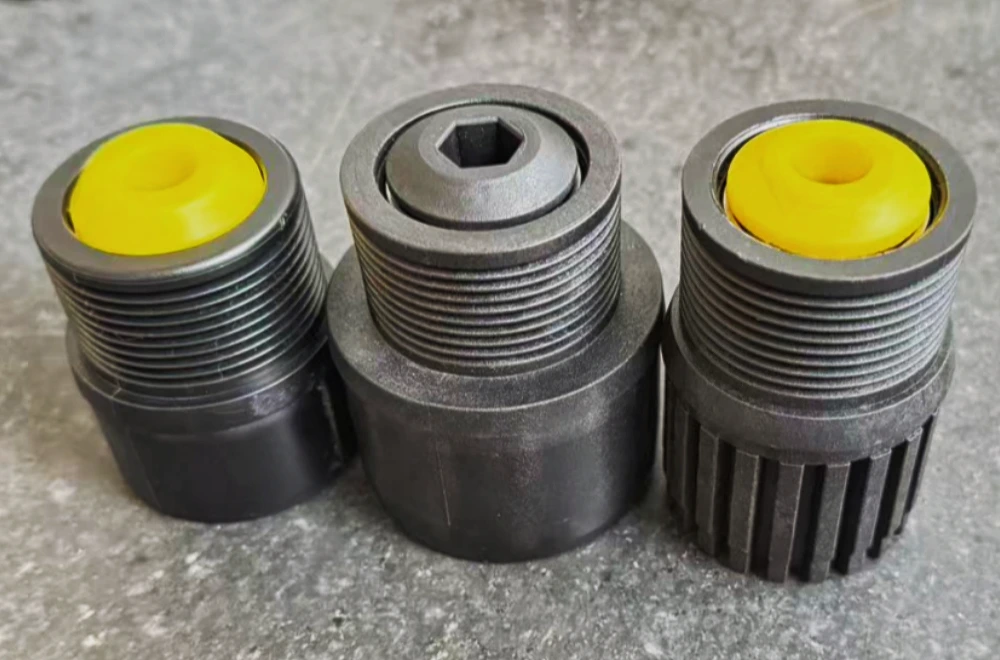
Plastic: injection-molded, tied to a mold
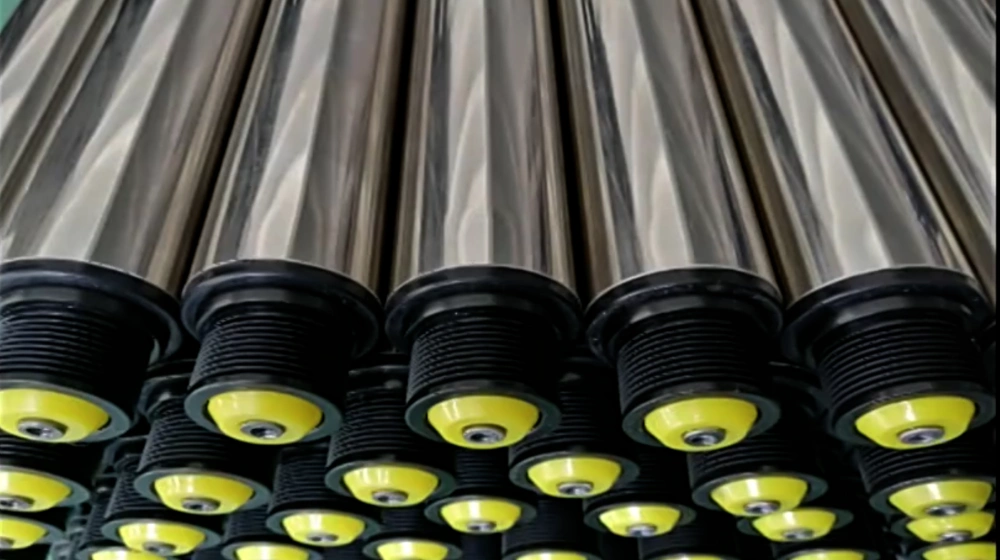
A plastic poly V pulley is produced from an injection mold. Once the mold exists, parts are cheap and repeatable — which is exactly why plastic wins on unit cost at volume. The catch is that each diameter (and each groove layout) is a specific cavity. We hold molds for the most-used sizes — Ø48, Ø50 and Ø60 mm — so those are fast and economical. A diameter outside that set means cutting a new mold, which only pays back over a large, repeating quantity.
On the common molds, the typical groove counts are 9PJ, 11PJ and 13PJ on Ø50 mm, and 9PJ on Ø60 mm — the counts most powered-roller lines actually call for.
Steel & stainless: machined, any diameter
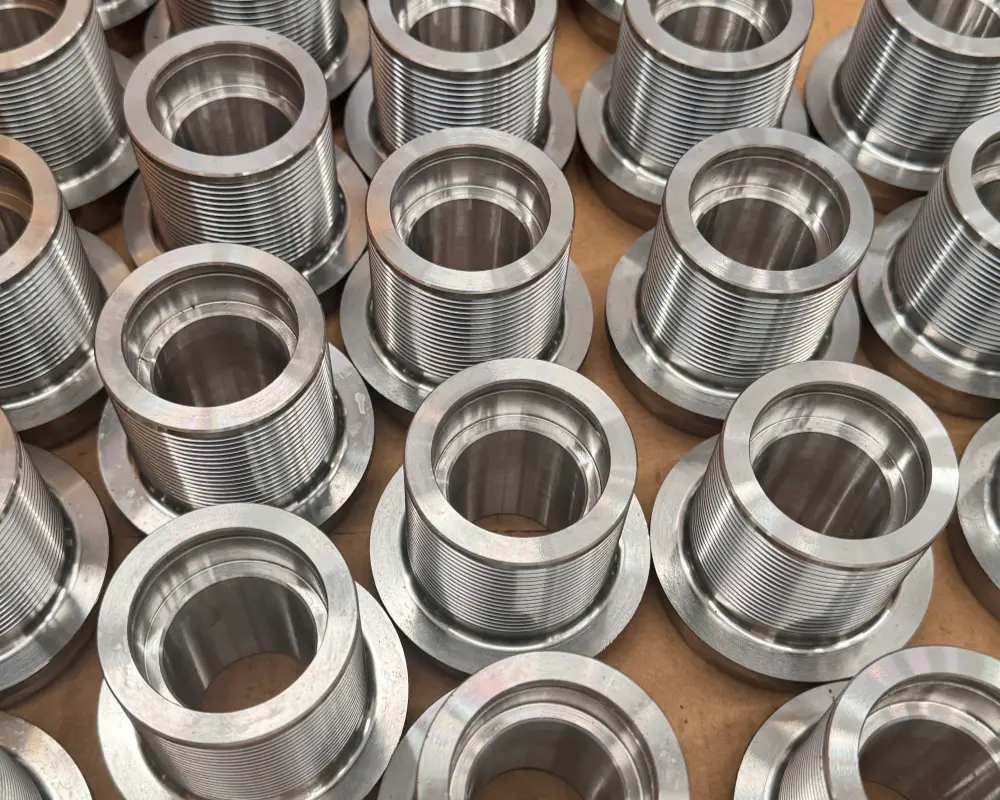
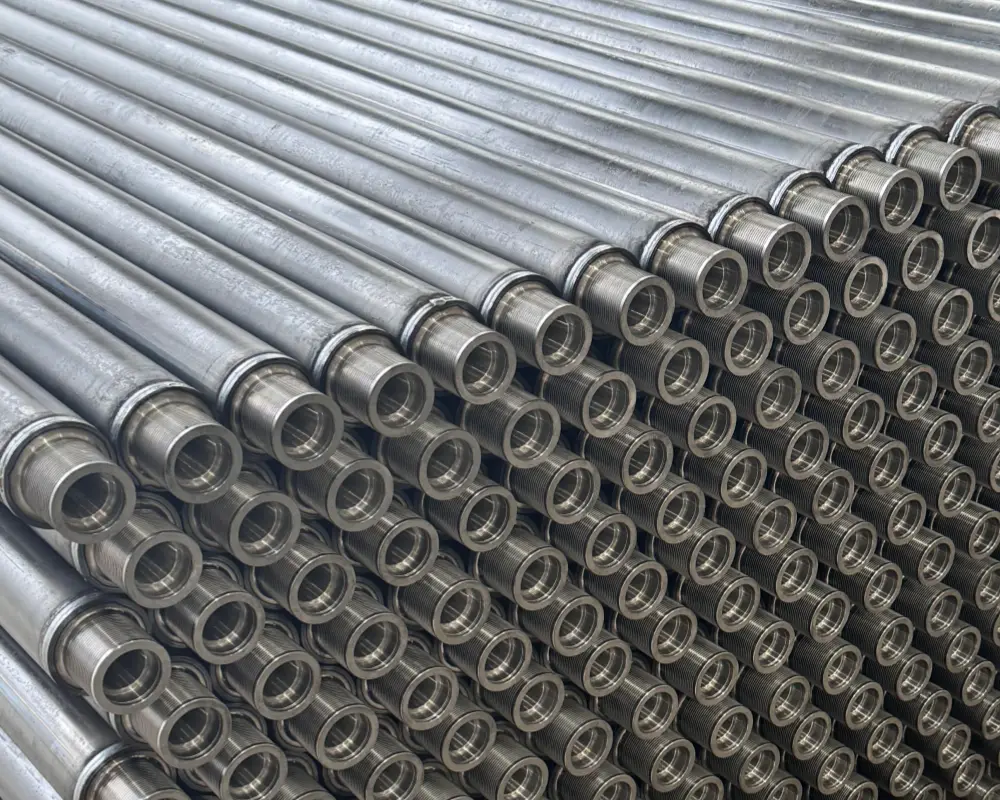
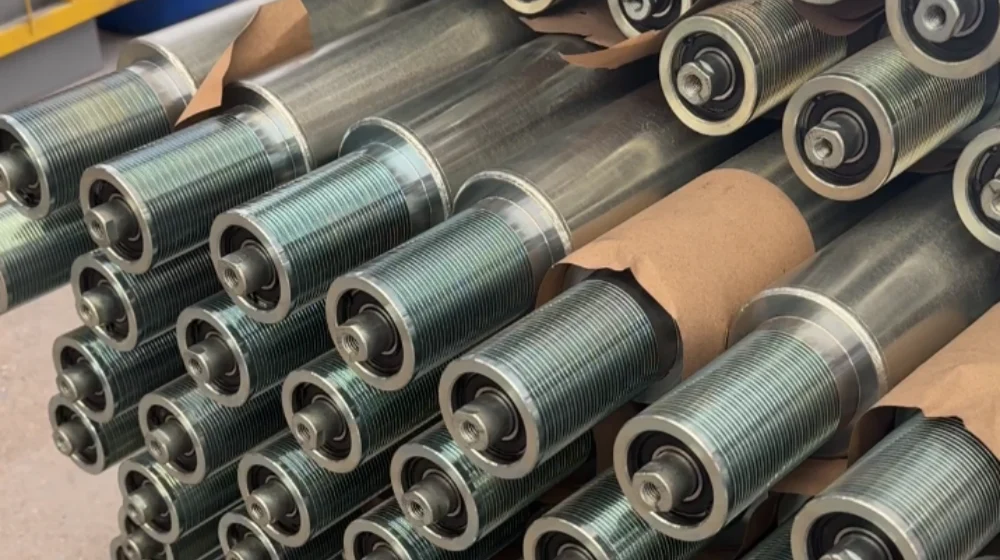
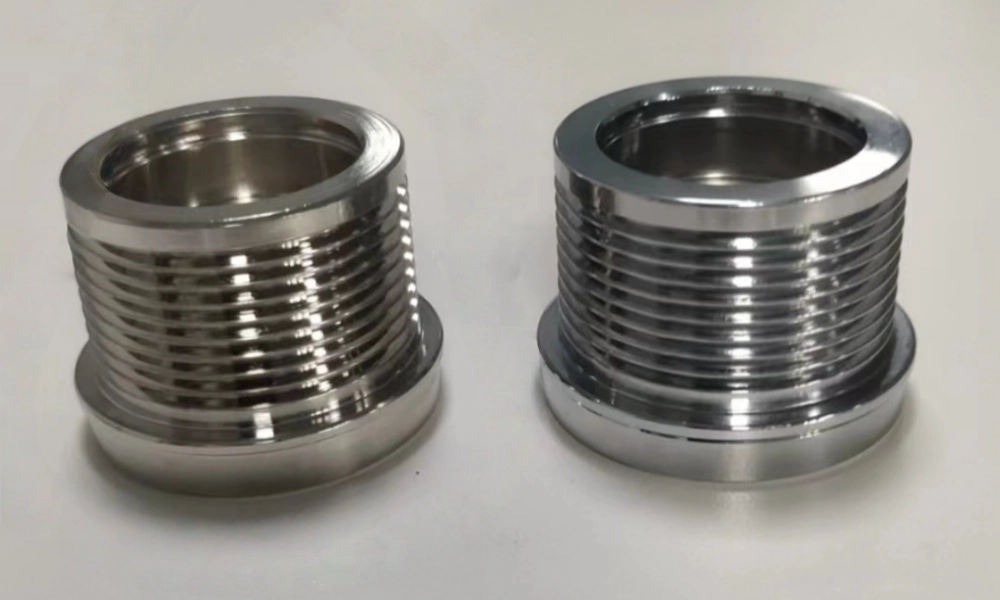
A steel or stainless pulley is turned from bar/blank on a CNC lathe, then welded to the tube. There is no cavity to commit to, so the same process produces any diameter and any groove count — you are limited by the drawing, not by tooling. That is why every non-standard size, and anything above Ø60 mm, is made in steel or stainless rather than plastic.
Machined metal also carries more torque and tolerates higher belt tension and start-up loads than a molded plastic wheel, which is why heavier or faster lines move to steel even at the common diameters. Aluminum is machined the same way and offers the same diameter freedom in a lighter pulley where weight matters.
Quick rule of thumb
High volume + standard Ø48/50/60 mm + light duty → plastic, for the lowest unit cost.
Non-standard diameter, custom groove count, heavier/faster, or harsh environment → machined steel or stainless.
Diameter & groove-count guide
Common configurations we run. Anything outside this — different diameter, different groove count, special shaft — is made to your drawing in steel or stainless.
PJ = ISO 9982 / DIN 7867 poly V profile, 2.34 mm rib pitch. Higher groove count carries more torque but needs more belt tension and axial space — we help match count to your roller centers and load. Machined pulleys are also available in aluminum where a lighter pulley is preferred.
Poly V belt selection by roller center distance
Once the diameter and groove count are set, the last thing to fix is the PJ belt length — and that is driven by the center-to-center distance between two rollers, not by the tube diameter.
Why the table is tied to the pulley, not the tube
The belt wraps around the PJ grooves, so its length is roughly 2 × center distance + π × pulley groove diameter. That wrap portion is fixed by the pulley’s groove diameter (Ø43 mm), which is the same across our standard range — so one table covers every tube that shares it.
What changes per tube is the base (seat) diameter where the pulley mounts: it’s machined to match each roller, so the same Ø43 mm groove pulley fits Ø40, Ø48, Ø50 and Ø60 mm rollers. The groove diameter — and therefore the belt selection below — stays identical across all four.
Ø43 mm pulley — center distance & PJ belt
For Ø40 / Ø48 / Ø50 / Ø60 mm rollers. The number after “PJ” is the belt length in mm.
| Center distance (mm) | PJ belt | Center distance (mm) | PJ belt |
|---|---|---|---|
| 55 | PJ246 | 80 | PJ290 |
| 60 | PJ256 | 83 | PJ302 |
| 67 | PJ270 | 90 | PJ314 |
| 73 | PJ282 | 94 | PJ316 |
| 75 | PJ286 | 100 | PJ336 |
| 78 | PJ288 |
Other center distances and pulley diameters are available — send your roller pitch and we will confirm the exact PJ belt.
Conveying duty is not the same as load capacity
One point worth specifying carefully: on a driven roller, the conveying duty (how much it can move) is different from the roller’s static load capacity (how much weight it can carry). Duty depends on the drive method, belt type and groove count, belt tension and ambient conditions — a roller will carry more weight statically than it can reliably drive.
In practice that means groove count and belt selection matter as much as the tube and bearing. Fewer driven rollers per zone, or a belt with more ribs, raise the drivable duty. Because the right combination depends on your roller centers, product weight, line speed and environment, duty is best assessed against the actual layout rather than reduced to a single headline number that won’t hold across every line.
Where poly V rollers are used
Poly V suits powered lines that need a positive, quiet, low-maintenance drive — typically lighter unit loads moving at speed.
Lineshaft conveyors
A single driven shaft powers each roller through a poly V belt — simple, low-noise, energy-efficient transport of cartons and totes.
Quiet, high-speed handling
Seating in several ribs at once, the belt runs smoother and quieter than a round belt or chain and holds speed well — suited to cartons and totes on packaging, sortation and e-commerce lines.
Low-maintenance drive
No lubrication like a chain, and a worn belt is quick to swap without dismantling the roller — useful on long powered runs where downtime and oil contamination are a concern.
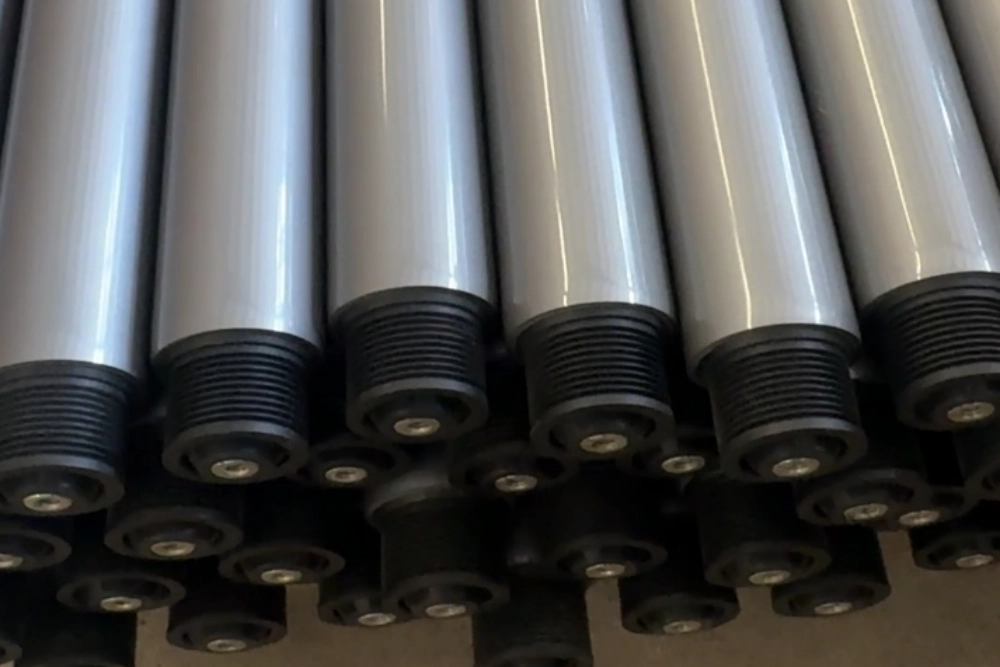
Tube coverings: PU coating or PVC sleeve
Where the product needs grip, quieter running or surface protection, the carrying tube can be finished independently of the poly V pulley. The two common options are a cast PU coating or a slip-on PVC sleeve — chosen mainly by load and service life.
Made in-house — from machined pulley to plated, assembled roller
Machining, welding, plating and assembly run under one roof, so material, groove count and finish are controlled on the same line.