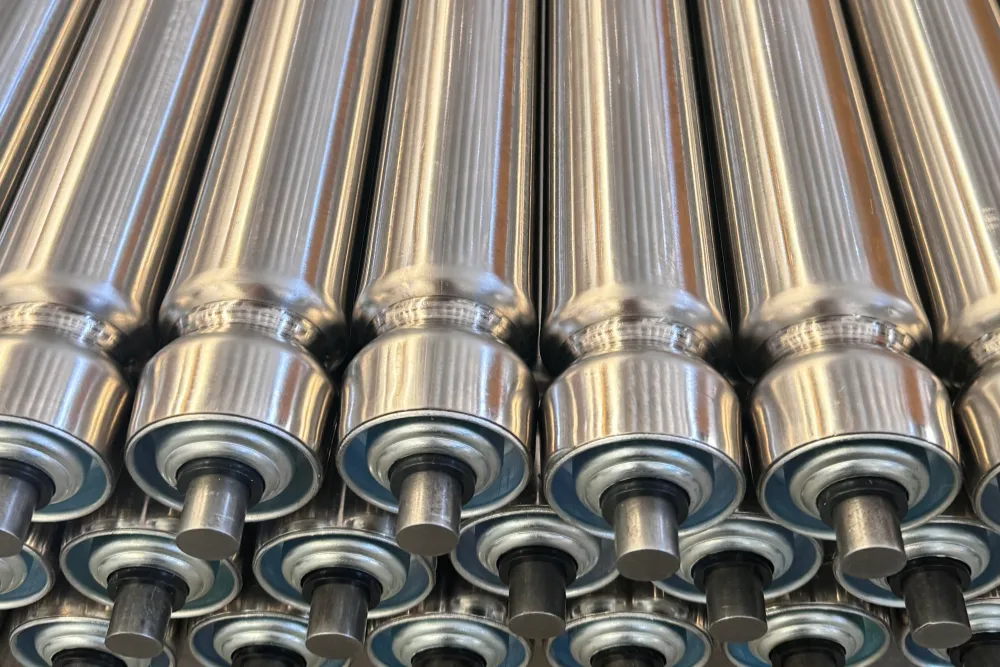
Grooved Conveyor Rollers
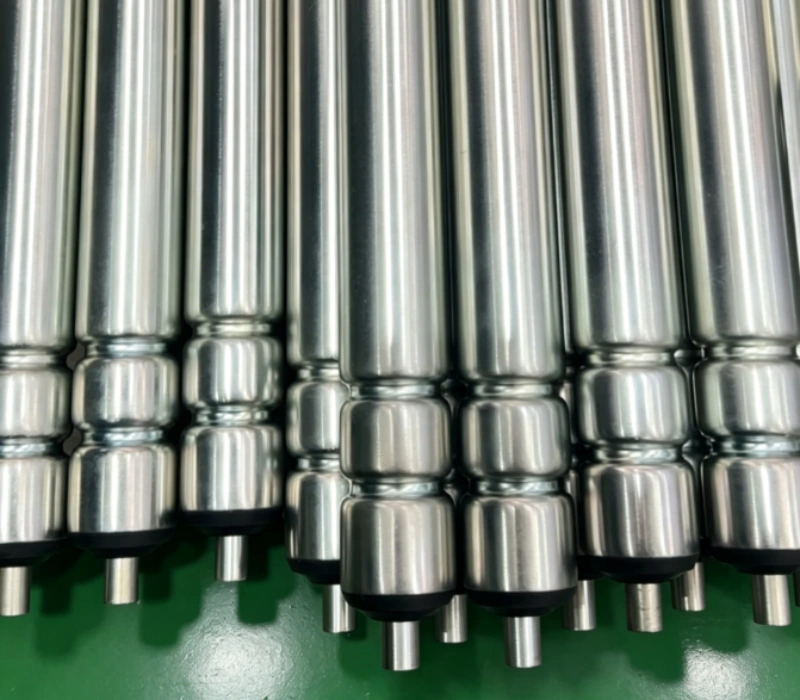
Round-belt (O-ring) driven rollers for line shaft and roller-to-roller conveyors;
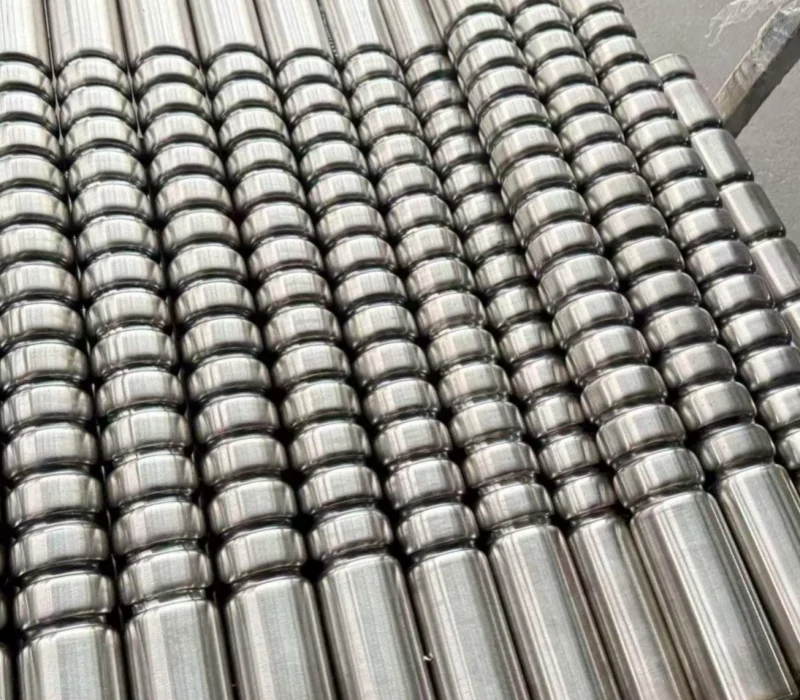
single, double-O, or multi-groove; pressed-groove or injection-molded pulley-groove;
galvanized steel, zinc-plated steel, or 304 stainless steel.
Two Grooved-Roller Constructions
Round-belt drive grooves are made in two ways. Choose the right construction based on your conveyor layout, drive method, and roller position.
Pressed-groove โ groove rolled into the tube
R3 ยท R4 ยท R5
R5 most common
any position
all-metal
The round-belt groove is rolled directly into the steel or stainless tube, so the drive surface is the tube itself โ all-metal and durable. The groove can be placed at any position along the tube, which makes the conveyor layout easy to design. It covers a wide range of tube diameters and groove profiles by changing the press disc.
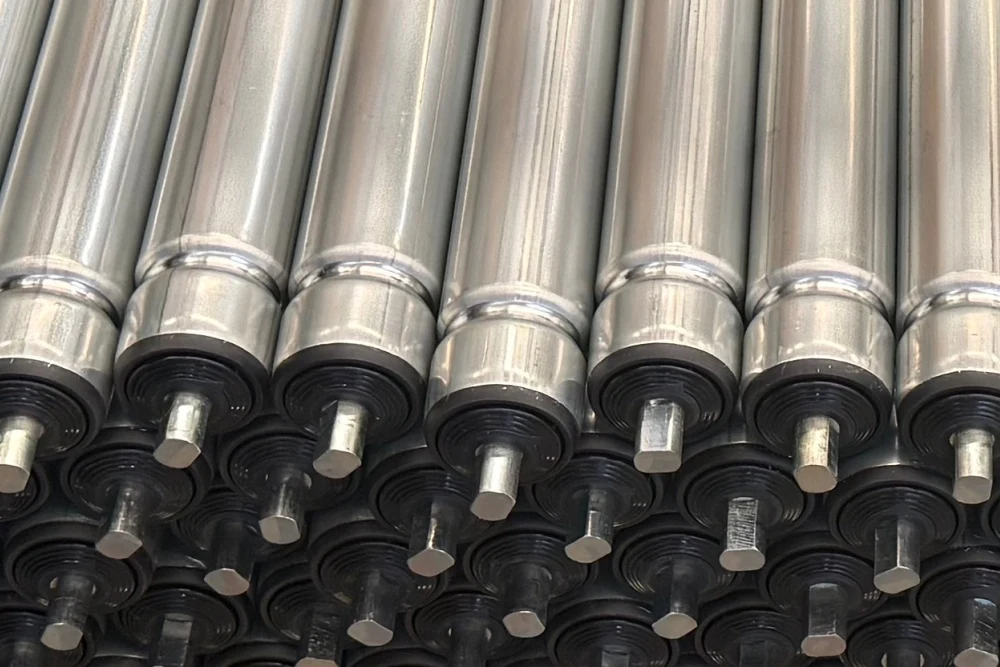
Pulley-groove โ injection-molded plastic pulley
R5
tube end only
not separately replaceable
molded
An injection-molded plastic grooved pulley is pressed onto the tube end, available in ร50 and ร60 mm with an R5 groove. Like a Poly-V head, the pulley cannot be replaced separately once pressed, and it sits only at the tube end. Custom pulley sizes require new injection-mold tooling.
Round-Belt Drive โ Line Shaft & Roller-to-Roller
An elastic polyurethane round belt (O-ring) seated in the groove drives the roller by friction โ taken from a line shaft, or from a motorized roller. With a double groove, each roller carries the drive on to the next, so a whole powered zone runs from a single drive, without chains or flat belts. In line shaft and roller-to-roller conveyors, the grooved roller is the driven roller.
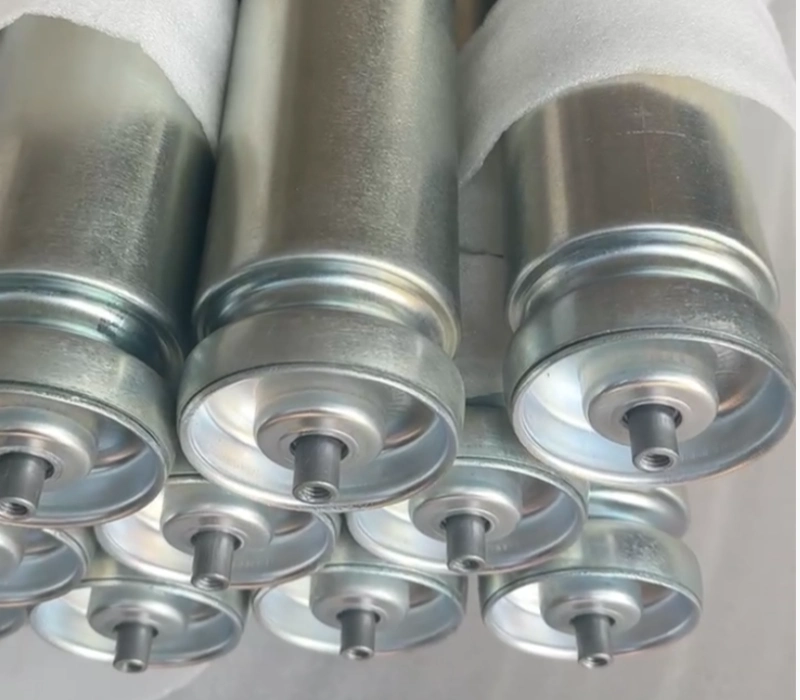
Single groove
One O-ring drives the roller โ for basic line shaft and single-belt drive.
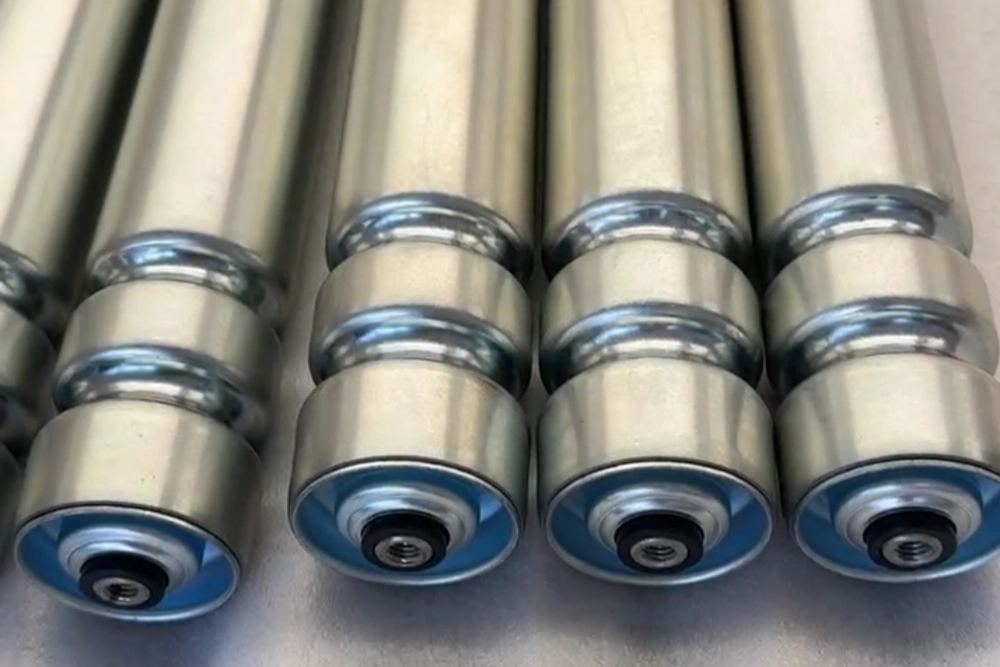
Double-O groove
Two belts: one takes the drive in, one passes it on to the next roller โ the roller-to-roller daisy chain.
Multi-groove
Several O-rings on one roller โ for higher driven load or multiple parallel belt lines.
Specifications & Selection
| Item | Options |
|---|---|
| Construction | Pressed-groove rolled into tube; pulley-groove plastic pulley at tube end |
| Tube diameter | ร38 ยท ร42 ยท ร48 ยท ร48.26 (1.9") ยท ร50 ยท ร60 mm |
| Wall thickness | 1.2 ยท 1.5 mm |
| Groove count | Single ยท Double-O ยท Multi-groove |
| Groove profile | R3 ยท R4 ยท R5, with R5 most commonly used |
| Pulley type | Injection-molded plastic pulley, ร50 / ร60 mm, R5 groove |
| Round belt | Polyurethane O-ring โ ร3 ยท ร4 ยท ร5 mm |
| Material / finish | Galvanized steel ยท zinc-plated steel ยท 304 stainless steel |
| Shaft | ร10 ยท ร12 ยท ร15 mm round ยท 11 mm hex โ or custom |
| Mounting / shaft end | Internal thread ยท external thread ยท machined flat ยท cross hole โ or custom |
Mounted to your frame
Internal thread, external thread, machined flat or cross hole โ round shafts ร10โร15 mm and 11 mm hex, or custom to your drawing.
Material Options
Galvanized steel
Formed from pre-galvanized steel strip โ the mill zinc layer bonds tightly to the steel for good adhesion, and the cut ends are closed by end caps. The economical, durable standard build for general line shaft and roller-to-roller conveyors.
Zinc-plated steel
Electroplated zinc on a polished tube โ the surface is lightly polished to remove minor scratches before plating, giving a cleaner appearance where looks matter. A modest cost increase over standard galvanized steel.
304 stainless steel
For washdown, food, and corrosive lines. For cost control, the tube can be 304 stainless steel with carbon-steel ends.
Other finishes to order โ nickel or chrome plating, or PU/PVC covering.
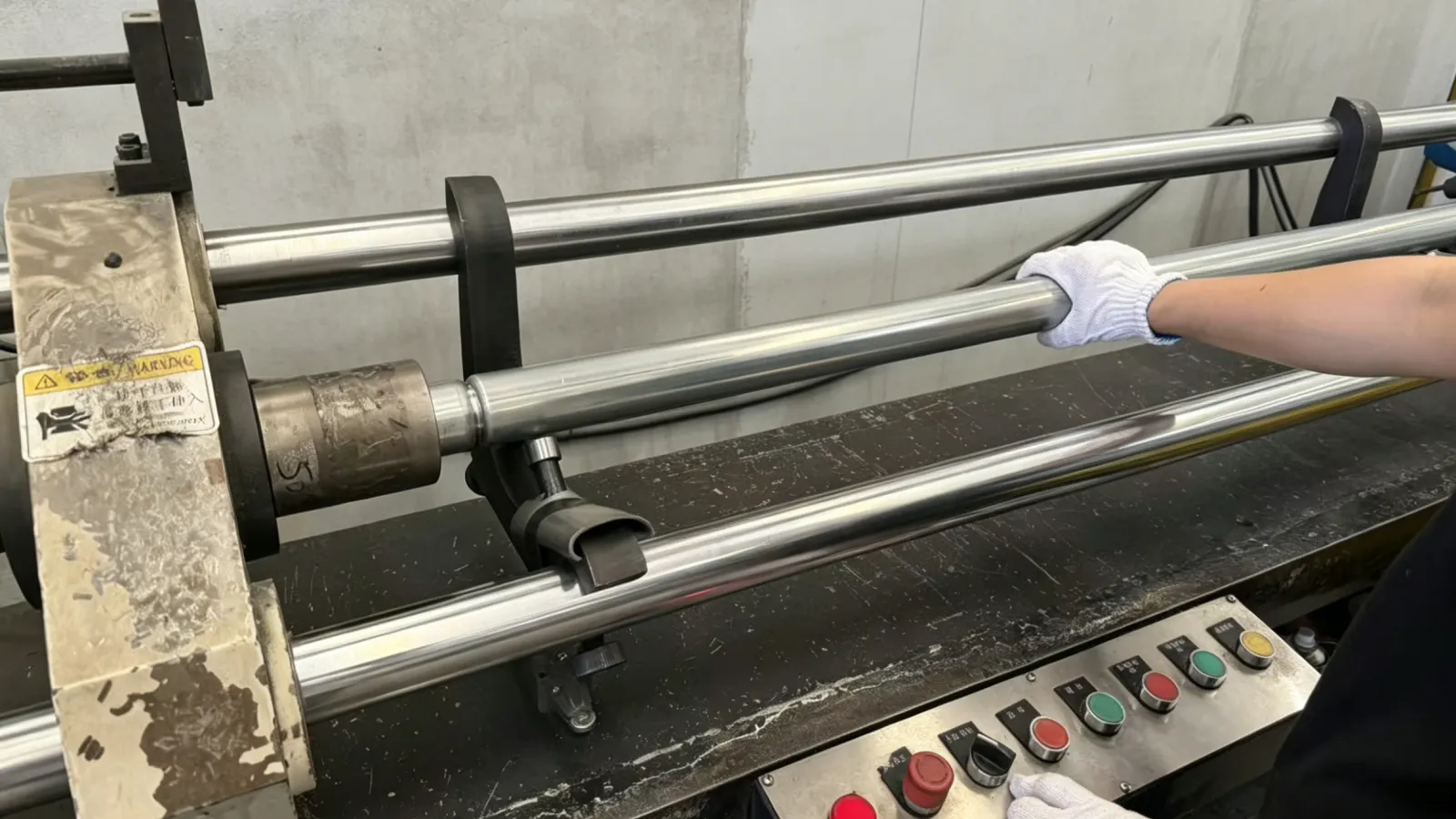
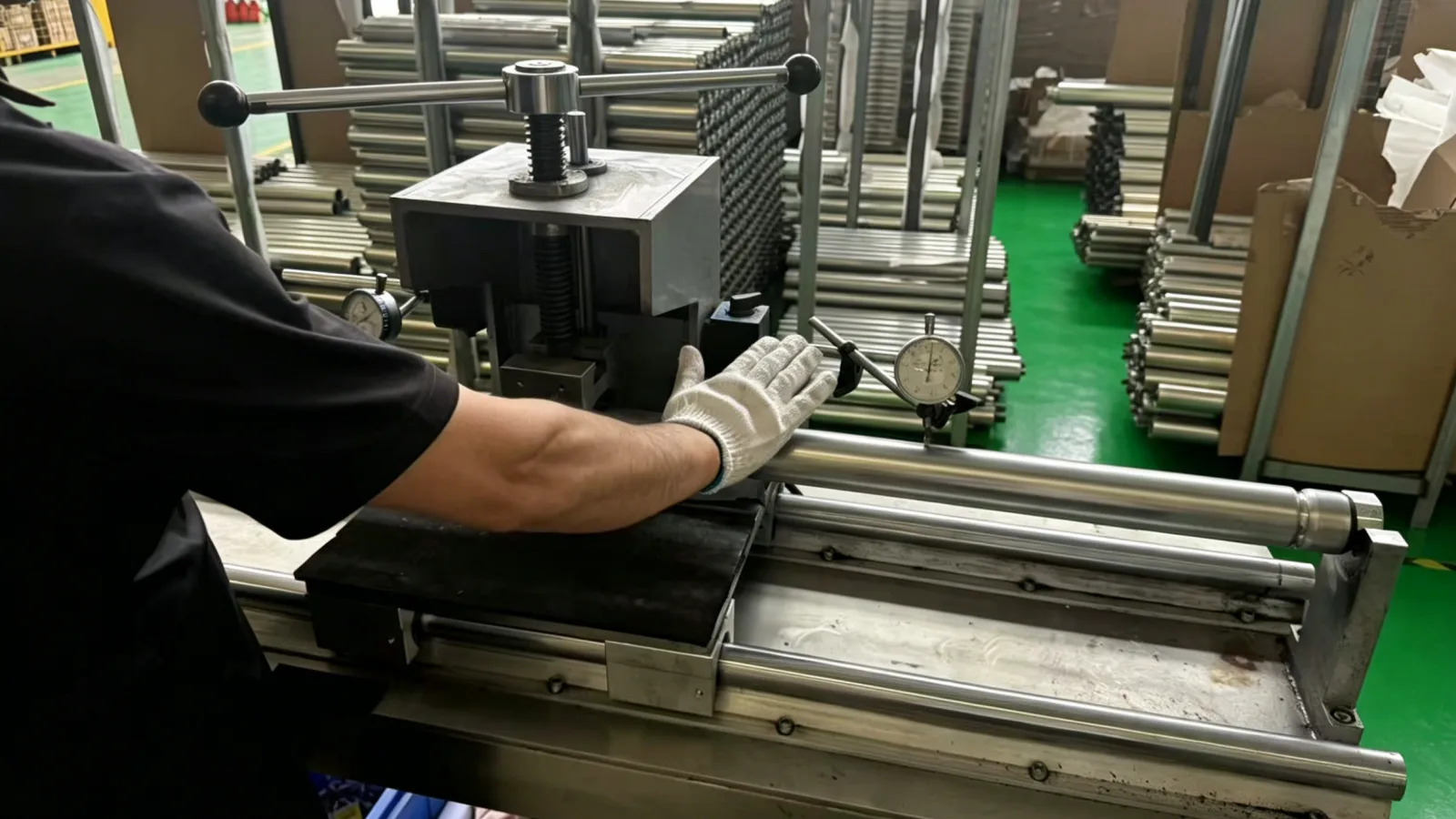
How We Make Our Grooved Rollers
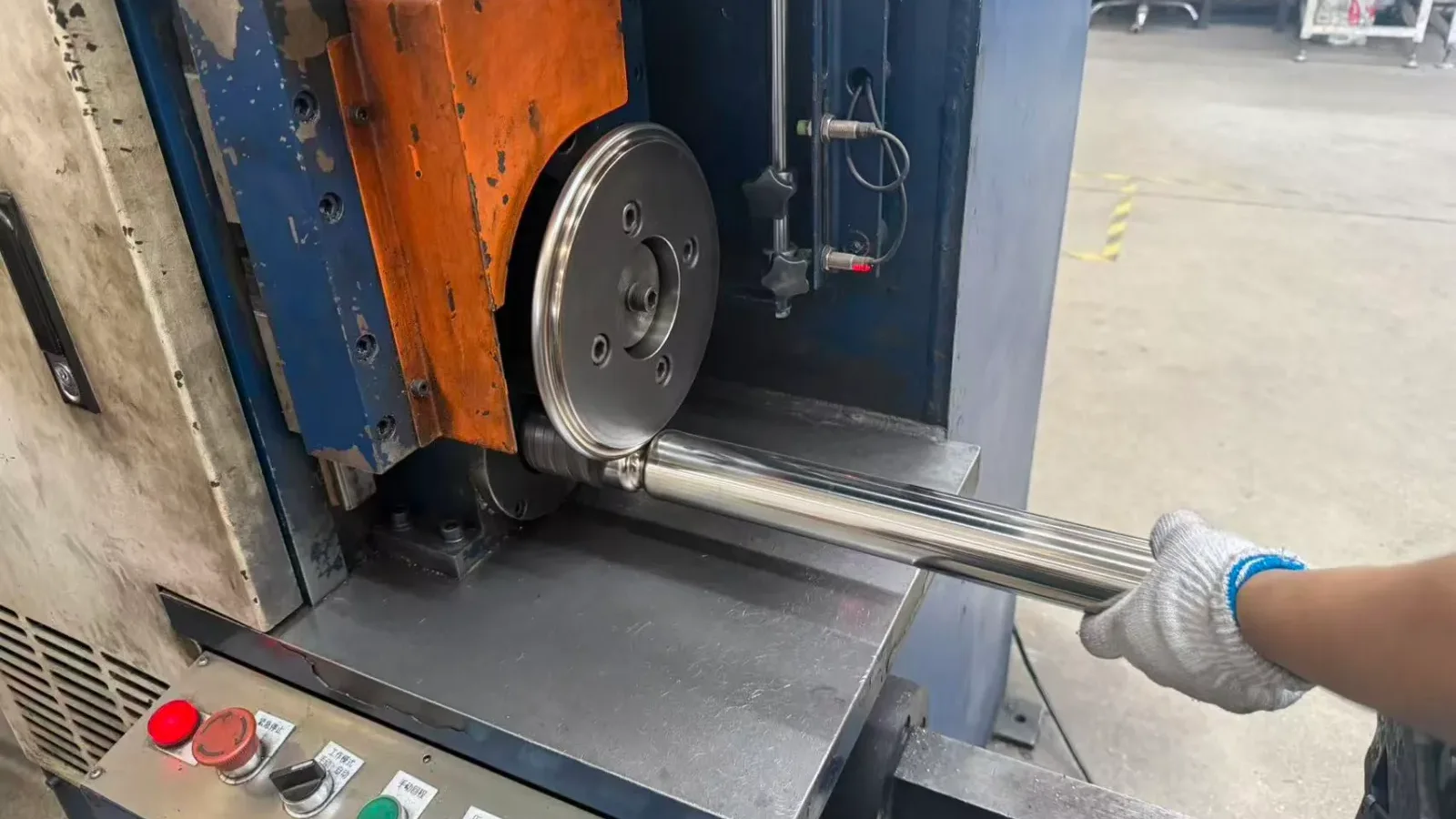
Where Grooved Conveyor Rollers Fit
Explore More
- Engineering guides: bearing housings for driven rollers and mounting options for your frame.
- Closest relative: Poly-V drive rollers — belt-driven with a multi-rib Poly-V belt for firm, positive powered transport.
- Where they run / not sure which type? grooved rollers on powered & accumulation lines; or compare all conveyor roller types.
Frequently asked questions
A grooved conveyor roller is a conveyor roller with one or more grooves that seat an elastic round belt (O-ring), so the roller is driven by friction from a line shaft or an adjacent roller. It is the driven roller in line shaft and roller-to-roller conveyors.
Choose by how the drive is carried. A single groove drives the roller from one belt โ basic line shaft or single-belt drive. A double-O groove takes the drive in on one belt and passes it on to the next roller on the second โ the roller-to-roller daisy chain that powers a whole zone from one drive. Multi-groove puts several belts on one roller for higher driven load or multiple parallel belt lines. Single and double-O are the most common.
Pressed-groove has the groove rolled into the steel tube (all-metal, any position, many diameters and R-profiles). Pulley-groove uses an injection-molded plastic pulley (ร50 / ร60, R5) pressed onto the tube end โ quieter, but only at the end and not separately replaceable.
Pressed-groove covers ร38, ร42, ร48, ร48.26 (1.9โณ), ร50, ร60 mm with R3 / R4 / R5 profiles (R5 most common). Pulley-groove is ร50 / ร60 with an R5 groove.
There’s no fixed belt-to-groove pairing. The R-number is the groove’s radius โ its depth: an R5 groove is a 5 mm-deep half-round, 10 mm across. The belt diameter is chosen by whether the O-ring should sit below the tube surface: if it must not stand above the tube (so it can’t catch the load โ common when the groove is mid-tube), use a smaller belt, e.g. ร4โร5 mm in an R5 groove; if standing slightly proud is acceptable, ร6 mm also fits. We can also press the groove a little deeper to keep a chosen belt recessed. We supply ร3 / ร4 / ร5 mm polyurethane O-rings; R5 is the most common groove.
No โ like a Poly-V head, the pulley is pressed on and cannot be swapped on its own (customers usually do not have the pressing equipment). Custom sizes require new injection-mold tooling.
Galvanized steel for general-purpose, cost-effective duty; 304 stainless for washdown, food, and corrosive lines. For cost, a stainless tube can be paired with carbon-steel ends.