

In conveyor roller manufacturing, carbon steel components usually require surface protection to reduce the possibility of corrosion during operation.
In industrial roller production, the most common galvanizing methods include:
- Electro-galvanizing (Zinc Plating)
- Pre-galvanized steel tube
- Hot-dip galvanizing
These three approaches differ in terms of manufacturing process, zinc coating thickness, surface appearance, and suitable applications.
From a manufacturing perspective, each galvanizing method corresponds to different production processes and practical use cases. When designing industrial conveyor rollers, engineers typically consider a balance between corrosion resistance, manufacturing cost, and production efficiency.
This article explains the differences between these galvanizing methods from a conveyor roller manufacturing perspective.
Why Surface Protection Matters for Conveyor Rollers
Conveyor rollers are typically made from:
- Carbon steel tubes
- Carbon steel shafts
In humid environments or long-term industrial operation, untreated carbon steel may develop corrosion.
During conveyor operation, corrosion may lead to:
- Increased surface roughness of the roller
- Degradation of surface appearance
- Localized material loss over time
For many warehouse, logistics, and packaging conveyor systems, galvanizing is a widely used method for corrosion protection.
From a manufacturing perspective, the selected galvanizing method affects not only corrosion resistance, but also:
- Roller machining processes
- Surface treatment procedures
- Overall production workflow
Therefore, the appropriate galvanizing method is usually selected based on the operating environment and manufacturing requirements of the conveyor rollers used in the system.
Electro-Galvanized Conveyor Rollers
Electro-galvanizing is an electrochemical process that deposits a thin zinc layer onto the steel surface.
In technical documentation, this process is often referred to as electro-galvanizing, while in mechanical manufacturing and component finishing it is also commonly called zinc plating. In most industrial contexts, these terms refer to the same surface treatment process.
In conveyor roller manufacturing, electro-galvanizing is typically performed after the tube and shaft machining processes are completed.
A typical production sequence includes:
- Tube cutting
- Tube machining
- Shaft cutting
- Shaft machining
- Electro-galvanizing
- Final assembly
The typical zinc coating thickness for electro-galvanizing is:
7–15 μm
Common characteristics include:
- Smooth surface finish
- Uniform appearance
- Minimal dimensional change
Electro-galvanizing can be used for both gravity conveyor rollers and driven conveyor rollers, making it one of the most widely used surface treatments in roller manufacturing.
In addition, electro-galvanizing is flexible for small-batch production or custom roller designs.
For rollers that require welded components, such as sprockets or drive elements, welding is typically completed before the electro-galvanizing process.
For more general information about industrial roller construction, see our overview of conveyor rollers.
Pre-Galvanized Steel Tube Conveyor Rollers
Pre-galvanized tubes are produced from galvanized steel coils, which are formed into tubes and then longitudinally welded.
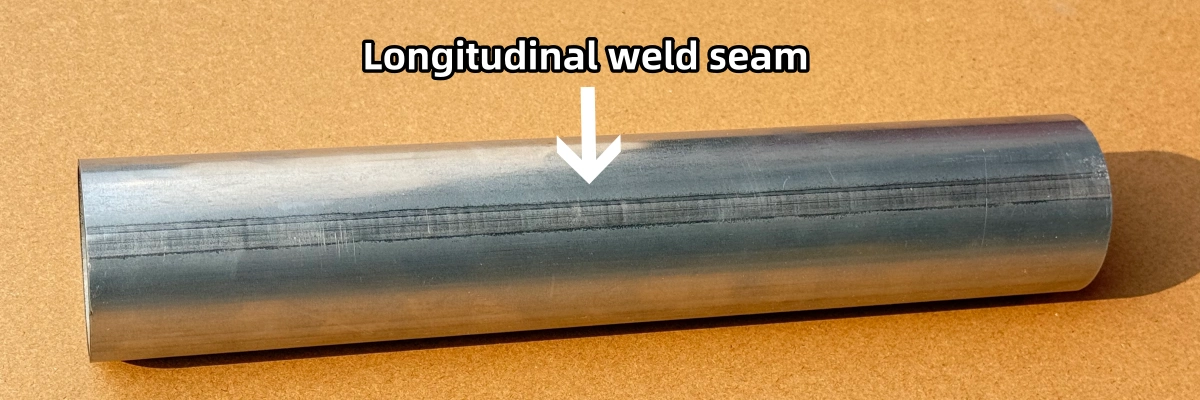
During tube manufacturing, the steel sheet is rolled into a cylindrical shape and welded along the longitudinal seam. After welding, a zinc repair coating is typically applied along the weld seam. The appearance of the weld seam may vary slightly depending on the tube manufacturing process.
However, because this repair coating provides relatively limited corrosion protection, the welded seam area is usually considered the most corrosion-sensitive location of the tube.
In most conveyor roller applications, this difference typically does not affect the normal performance of the roller.
Pre-galvanized tubes generally have the following characteristics:
- Zinc coating applied at the steel mill
- Consistent tube surface appearance
- No additional galvanizing process required during roller production
Typical coating thickness is approximately:
5–20 μm
During conveyor roller manufacturing, welding is usually avoided when using pre-galvanized tubes, since welding would damage the original zinc coating.
Instead, these rollers typically use pressed bearing housing structures, which also enclose the cut tube ends so the bare cut edge is not exposed in service.
The manufacturing process generally consists of:
- Tube machining
- Shaft machining
- Final assembly
This structure is commonly used in gravity conveyor rollers.
Production Volume Considerations for Pre-Galvanized Tubes
Another factor in using pre-galvanized tubes is production quantity.
Because these tubes are produced from galvanized steel coils, tube manufacturing usually requires a certain minimum production volume.
For very small orders, producing custom tubes from steel coils can significantly increase costs.
Therefore, for non-standard roller sizes or small order quantities, pre-galvanized tubes may not always be practical.
In such cases, manufacturers often choose electro-galvanizing, since it can be applied after machining and is more flexible for small-batch production.
Hot-Dip Galvanized Conveyor Rollers
Hot-dip galvanizing involves immersing steel components into molten zinc to form a protective coating.
From a manufacturing perspective, hot-dip galvanizing is usually applied after the tube and shaft machining processes are completed, followed by final assembly.
Typical coating thickness is:
40–80 μm
Compared with electro-galvanizing, hot-dip galvanizing provides a thicker zinc layer and generally higher corrosion resistance.
Common characteristics include:
- Thick zinc coating
- Rougher surface texture
- Less uniform appearance
However, in the conveyor roller industry, the use of hot-dip galvanizing is relatively uncommon.
In automated conveyor systems, if customers believe that electro-galvanizing or pre-galvanized tubes do not provide sufficient corrosion protection, many applications will directly use stainless steel conveyor rollers.
In automated conveyor equipment, most conveyor rollers use thin-wall steel tube designs, and in many situations the cost increase of stainless steel remains acceptable.
However, when the roller diameter or tube wall thickness becomes larger, using stainless steel may significantly increase manufacturing costs.
In some special projects, when higher corrosion resistance is required but full stainless steel construction is not preferred, and surface appearance is not critical, hot-dip galvanizing may be considered as a compromise between corrosion protection and cost.
Comparison of Galvanizing Methods
| Method | Typical Zinc Thickness | Surface Appearance | Typical Applications |
|---|---|---|---|
| Electro-galvanizing | 7–15 μm | Smooth and uniform | Indoor conveyor systems |
| Pre-galvanized tube | 5–20 μm | Consistent tube surface | Gravity conveyor rollers |
| Hot-dip galvanizing | 40–80 μm | Rougher surface | Outdoor or corrosive environments |
The coating thickness values above represent typical engineering ranges. In practice, coating thickness can often be adjusted depending on the environment or specific customer requirements.
Frequently Asked Questions
Galvanized vs stainless steel conveyor rollers: which should you choose, and how do costs compare?
It depends on the environment. For indoor warehouse, logistics, and packaging duty, galvanized rollers protect carbon steel at lower cost. For washdown, food contact, or persistent chlorides, we build stainless rollers instead — usually 304, with 316 available for harsher chemistry. Stainless costs more, and the gap widens as diameter and wall thickness grow, so the practical rule is: galvanized for moderate humidity, stainless where zinc would be attacked.
Will galvanized conveyor rollers rust in a humid or cold-storage warehouse, or do you need stainless?
Zinc protects against general indoor humidity, but cold-storage and washdown areas add constant condensation, which is harder on a zinc coating and on the bearings. On a sealed roller the bearing housings and end caps matter as much as the tube surface. For refrigerated, damp, or condensing duty we usually recommend 304 stainless rollers rather than galvanized, since zinc has a practical limit in continuously wet service.
Do galvanized rollers still rust at the cut tube ends or bearing area even when the tube surface looks fine?
It depends on the galvanizing method. A pre-galvanized tube is cut to length, so the cut edge itself is bare steel — but on the finished roller that cut end is enclosed by the pressed bearing housing and end cap, not left open to the air, so it is not a corrosion concern in service. On the same tube the longitudinal weld seam, which runs along the outer surface, has a thinner zinc layer and a repair coating that adheres less well than the mill-applied zinc, so the seam is the most corrosion-sensitive spot. Electro-galvanized rollers are plated after cutting, so their cut faces are coated as well.
Are galvanized (zinc-plated) conveyor rollers food-grade or safe for direct food contact?
For direct food contact, we recommend 304 stainless rollers, not galvanized. Zinc coatings are generally treated as acceptable only for non-food-contact framing and equipment, and zinc can react with acidic foods. For washdown lines and any roller that touches product, stainless is the standard choice. Galvanized rollers are better suited to general handling and packaging conveyors that do not contact food directly.
Conclusion
In conveyor roller manufacturing, electro-galvanizing, pre-galvanized steel tubes, and hot-dip galvanizing are three commonly used corrosion protection methods.
They differ primarily in zinc coating thickness, manufacturing processes, and suitable applications.
From a manufacturing perspective, selecting the appropriate galvanizing method typically requires balancing corrosion resistance, production cost, and manufacturing processes, depending on the requirements of the conveyor system.
These design factors are commonly evaluated during conveyor roller manufacturing and custom engineering processes. For example, LEEV supplies zinc-plated gravity rollers and galvanized gravity rollers finished by these methods.
For a complete overview of conveyor roller types and installation options, please visit our conveyor rollers page.
If you are looking for a reliable conveyor roller manufacturer or supplier, you can visit our homepage to learn more about our production capabilities, customization options, and bulk supply services.


